
Published on Tuesday, November 3 2026
by landrianina in Blog
Dear Families,
Yes, you read that right. The days are getting shorter, the temperatures are cooling off, and the trees are beginning to shed their beautiful, vibrant colours. Winter is not here yet, but we can definitely see and feel that it is on its way.
Time seems to be slowing down, and yet there is still so much happening in nature!
Beneath the fallen leaves, in the hollows of the trees, in our schoolyards, and even in the sky, the world is preparing to face the coldest months of the year.
This season is a time of transition that invites us to slow down a bit, open our eyes, and discover—along with our children—all the secrets nature has in store for us.
This month, I invite you to put on your boots and coats and set out in search of the first signs of winter’s arrival. As always, we will also share some experiences from our centres, along with a new challenge for the whole family and cultural events you won’t want to miss.
Enjoy reading, and above all, have a wonderful time exploring the great outdoors!
Mathieu Lambert
CPE Nature Project Coordinator and Outdoor Education Advisor, Carrefour francophone.
A forest in transition
Have you noticed how quickly our landscapes change at this time of year?
Just a few weeks ago, our maple trees were ablaze with magnificent shades of red and orange. We can still enjoy their colours, but if we pay close attention, we will notice that gray is becoming an increasingly prominent feature in our landscapes. The trees are gradually losing their leaves, and the first frosts are starting to appear. Now is the time to enjoy these beautiful fall days and all the surprises they have in store for us.
These changes can raise many questions for children:
These are questions that invite us to look at nature in a new light. Some creatures seem to disappear as winter approaches, but they’re sometimes much closer than we imagine!
Every fall, many animals migrate. Several species of birds embark on an incredible journey to regions where they can find food more easily.
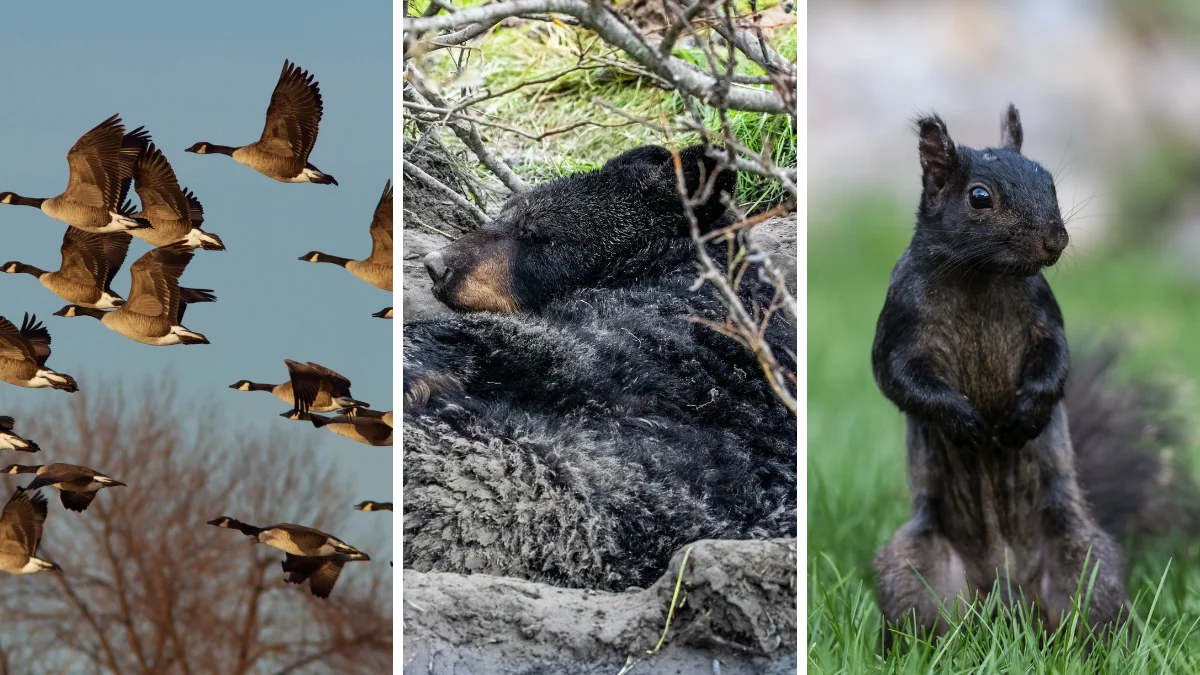
This is the case, for example, with Canada geese, which we can sometimes see flying across the sky in their famous “V” formation.
But they aren’t the only ones. The monarch butterfly, a magnificent orange butterfly that we can see in the summer, also accomplishes a remarkable feat: its migration can take it all the way to the forests of Mexico, several thousand kilometers from our gardens!
However, not all animals head south.
The small black-capped chickadee, for example, stays with us all winter. Although small in size, it is remarkably well-adapted to the cold. As early as fall, it can hide seeds in various places—such as in cracks in the bark—to retrieve them when it needs them.
Squirrels, too, take advantage of this time of year to stockpile food. Take the time to watch them on your next walk: you might be lucky enough to spot one carrying a seed or rummaging through the leaves!
Other animals become much more low-key. Some frogs spend the winter sheltered—in the water or under the forest floor—depending on their species. Their activity slows down, allowing them to get through the cold months while expending very little energy.
Ultimately, every species has its own way of adapting to winter!

When we look at a bare tree, we might tend to think that not much is happening anymore. But think again!
For many deciduous trees, shedding their leaves is part of a strategy that allows them to survive the cold season, particularly by limiting their water loss.
If you look closely at the branches of a maple or a birch, you might spot small buds—already there—that will protect the future leaves until spring returns.
Conifers, such as pines and spruces, retain most of their needles. These are adapted to winter conditions.
And while it is fascinating to observe trees and how they adapt to the changing seasons, looking at the ground beneath them can be just as intriguing. The fallen leaves that accumulate there play a valuable role. They provide shelter for many living creatures and, as they gradually decompose, help enrich the soil.

One of the most wonderful things about children is their ability to notice details that we often no longer pay attention to.
It might be a nest that is become visible in a bare tree, a nibbled pinecone at the base of a tree trunk, a seed clinging to a coat, or even a footprint found in the mud.
These clues can become the starting point for great discoveries. And, as always, we don’t need to know all the answers.
When a child asks us why an animal behaves a certain way, we can reply, “I don’t know. We could think about it together and do some research—what do you think?” Or, “That’s an interesting question! Do you have any ideas about why that might be?”
Curiosity encourages children to observe, compare, come up with explanations, and seek answers. These are ideal ingredients for developing their critical thinking skills and their understanding of the world around them.
You could also choose a tree, a spot in the woods, or an area in your yard and return there regularly over the course of several weeks.
From one week to the next, you will notice many changes. What is different? Have the colours changed? Do you hear the same birds? Is the ground still damp? Are there still insects?
Over time, these observations will help you become aware of the rhythm of the seasons and understand that nature is always changing, even when those changes are almost invisible.
As the cold weather sets in, it is sometimes tempting to stick to indoor activities. It is true—you can’t say no to a nice cup of hot chocolate under a blanket! Yet November remains the perfect time to experience nature in a different way.
The bare branches reveal shapes that were previously hidden, the frozen ground crunches under our feet, and the first tracks in the snow—when it finally arrives—tell us new stories.
Ultimately, to enjoy all the treasures nature has to offer, the key is to adapt our outings to the weather, pack warm clothes, and make sure the kids are comfortable.
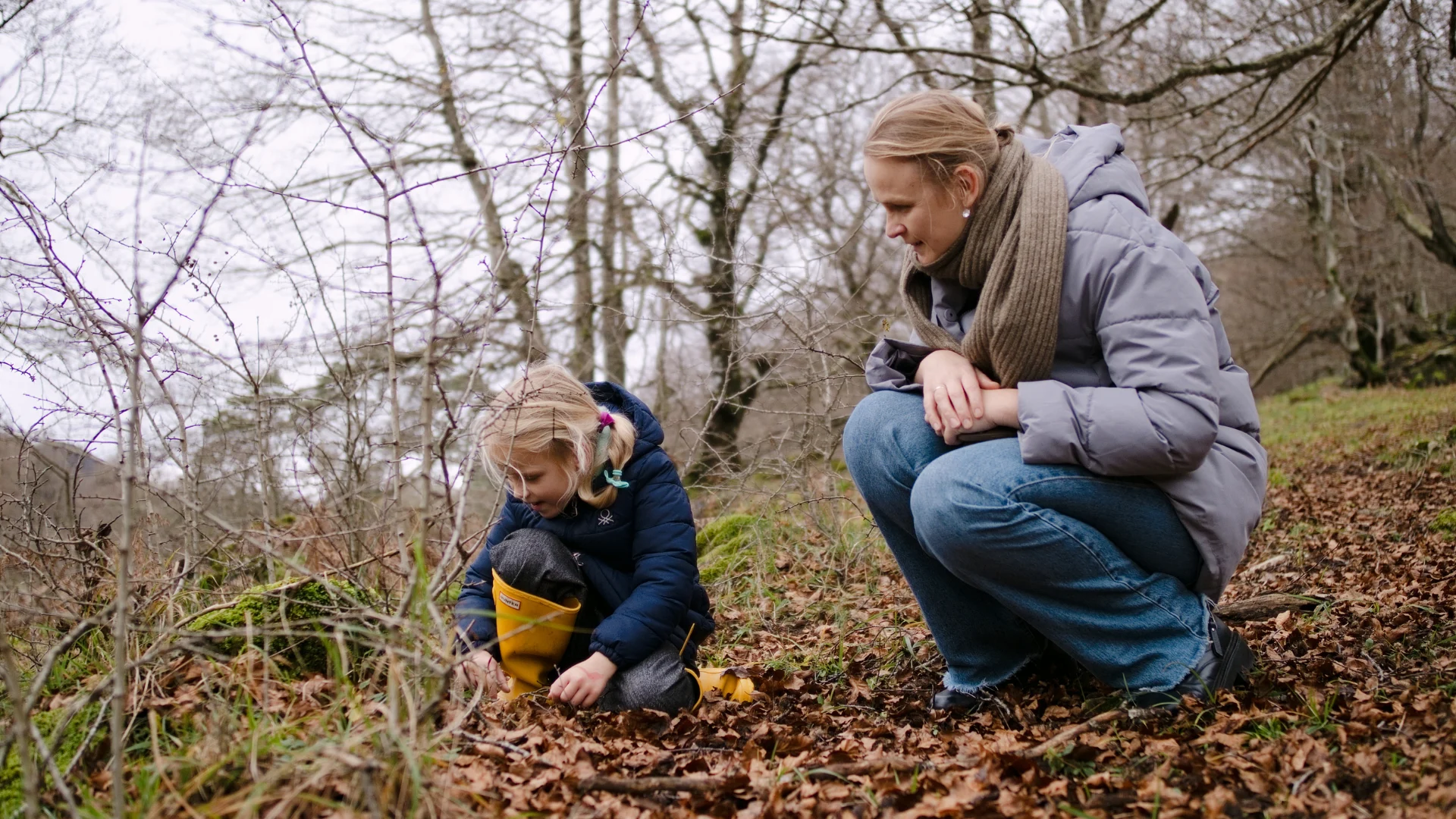
A Pumpkin Hunt at the Boréal des tout-petits childcare Centre!
What better way to celebrate fall than with a pumpkin hunt?
At the Boréal des tout-petits early childhood centre, the children took part in a scavenger hunt centered around this quintessential symbol of the season.
Caroline, supervisor at Boréal des tout-petits, loves keeping this tradition alive at the early childhood centre. The pumpkin hunt is a great way to help children explore nature.
They have to pay close attention to try to spot the pumpkins. In addition to the joy of discovery, this type of game encourages children to observe their surroundings, move around, and share their finds with others.
And what a joy it is to see how proud they are once they’ve found their pumpkin. The older children were even able to carry theirs all the way back to the childcare centre on their own!
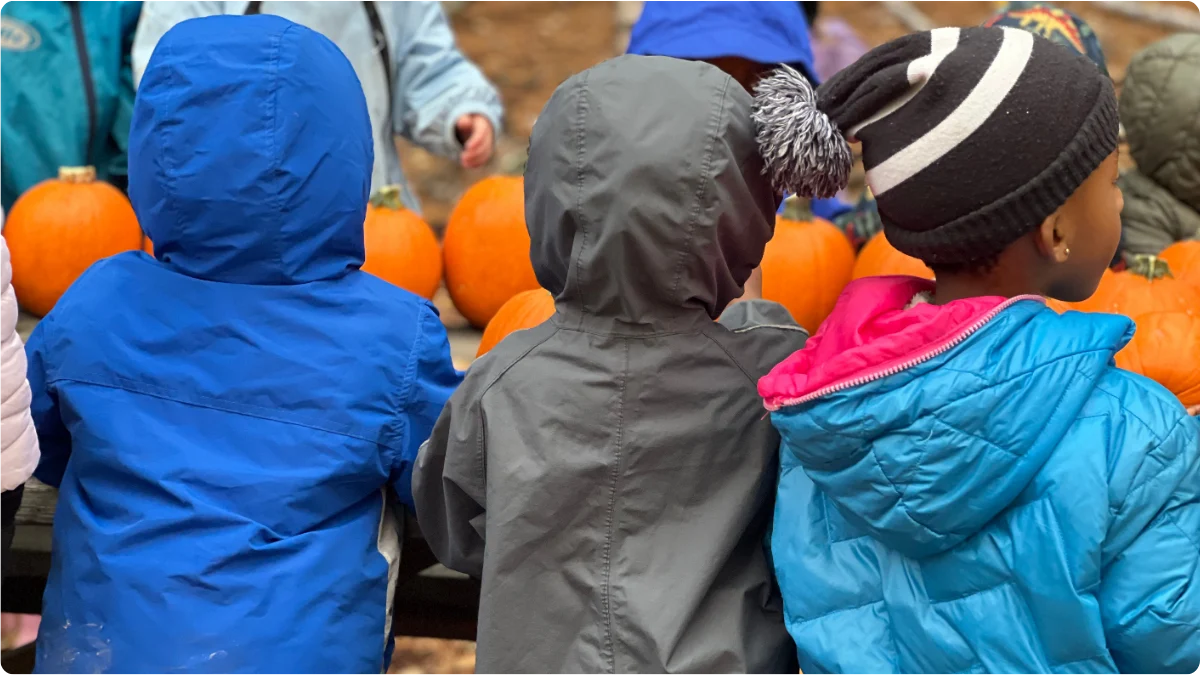
At Carrefour des tout-petits, the children had the opportunity to take part in a musical enrichment activity with André Thériault.
Music offers a rich world for young children. It allows them to listen, move, experiment with rhythms, recognize sounds, or simply let themselves be carried away by a melody.
Every child can participate in their own way: some love to dance and move around, while others prefer to listen carefully before joining in.
During this session, the children had the chance to share wonderful moments of togetherness and joy through music.
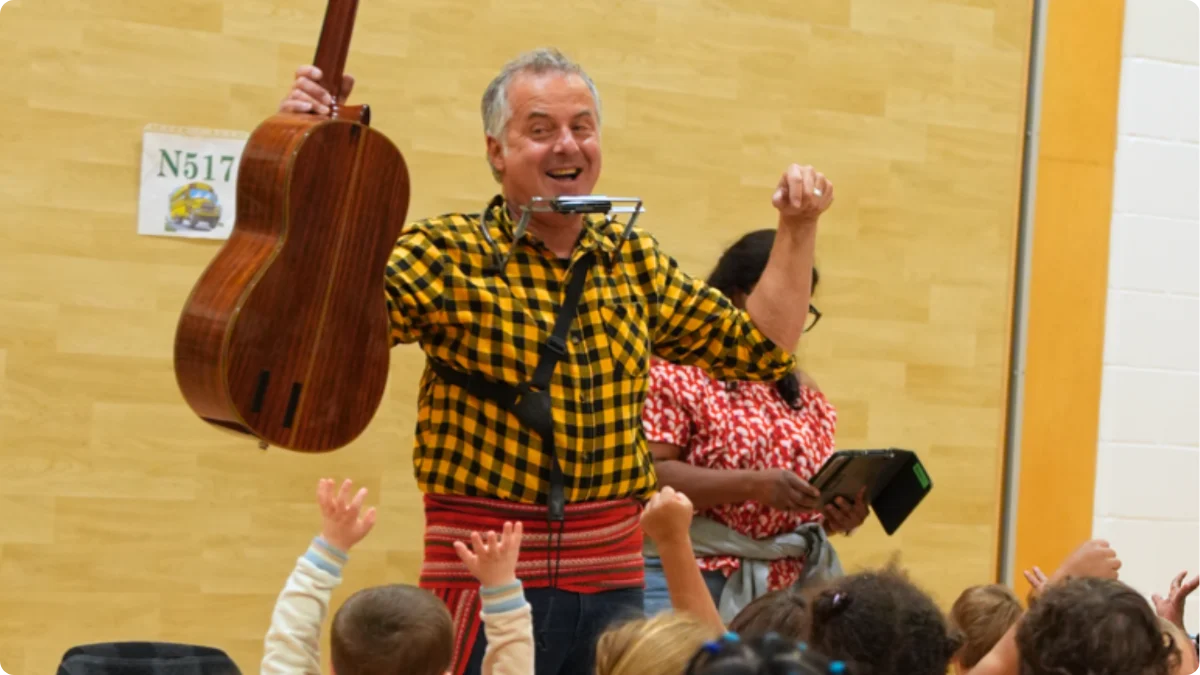
“In this photo, we can see Mr. André singing and dancing with the children at the Carrefour des tout-petits centre, his arms raised and fully immersed in the moment. It captures beautiful moments of togetherness, where music brings the children together and inspires them to participate enthusiastically.” Natasha Lapointe, Programs Assistant.
Nature Detectives!
What if, on your next walk, you became nature detectives?
Your mission, should you choose to accept it: find five clues that show nature is getting ready for winter!
You don’t need any special equipment or to go very far. Your backyard, a park, or even a forest trail can become wonderful places to explore.
Here are a few clues to help you:
With younger children, you can simply take the time to look, point out, and talk about your discoveries.
With older children, you can have fun photographing your clues, formulating hypotheses, drawing your discoveries, or searching for explanations together.
Don’t hesitate to let yourself be surprised. Maybe you will find additional clues as you continue your observations!
Tip of the month: Observe without disturbing. You don’t need to move leaves, pick plants, or disturb animal shelters. I’m sure you will make wonderful discoveries just by taking the time to look and letting nature take its course.
Have you spotted a particularly surprising clue? Share your discovery with us! We would love to hear what your little explorers have noticed.
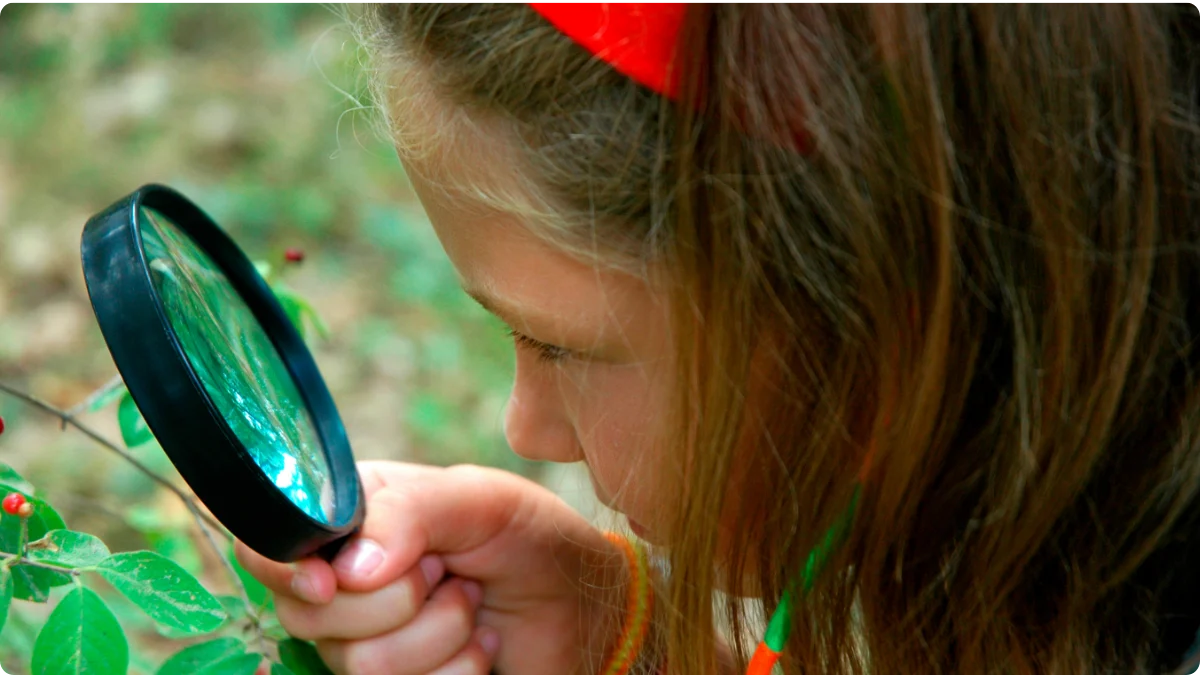
Migration, hibernation, or wintering?
How do animals get through the winter? Let’s explore some of their strategies together.
Some animals, such as the monarch butterfly and many species of birds, leave our region to head for more favorable locations during the cold season. They take a long journey—this is called migration.
Hibernation, on the other hand, is a period during which the body’s functions slow down significantly to conserve energy. Groundhogs are among the small mammal species that hibernate.
Finally, the term “winter sleep” is often used to describe a bear’s winter rest. Its activity and metabolism slow down considerably, but its body temperature generally drops less than that of many small hibernating mammals.
And of course, there are animals that remain active all winter long, such as chickadees, hares, and squirrels!
On your next outing, you can ask your children this question: “Will the animals we’re seeing today still be here this winter?”
Over the next few weeks, the first snows may begin to transform our landscapes. Some animals will continue their preparations, deciduous trees will gradually enter their dormant period, and new tracks may appear on our trails.
What could be better? We will be able to keep going outside and exploring with our children. Whether it is a walk in the woods, a squirrel spotted in the yard, or even just a few minutes spent watching the first snowflakes fall, every moment spent outdoors can become an opportunity to discover the world around us.
Nature never ceases to amaze us!
See you soon for more outdoor adventures,
Mathieu Lambert
CPE Nature Project Coordinator and Outdoor Education Advisor, Carrefour francophone.
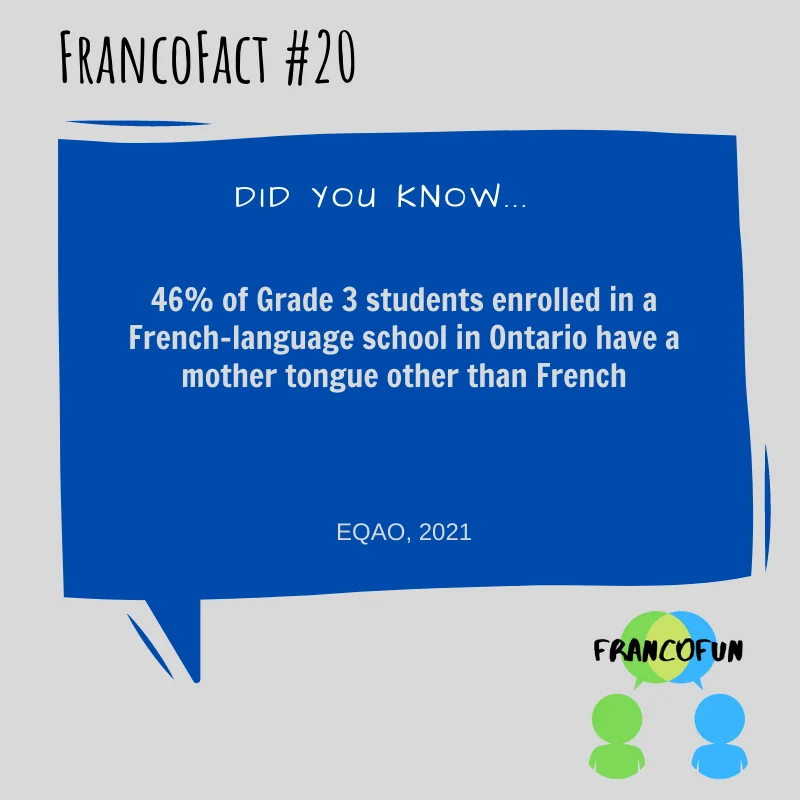
FrancoFacts: Findings from research on vocabulary and language in minority contexts, presented by Chantal Mayer-Crittenden, a speech-language pathologist and professor at Laurentian University
Our project partners: PLAYLearnThink, Collège Boréal, The First Nations, Métis, and Inuit Educational Centre, and Pavillon Shkode (Heart of the Fire); our research partners: the Center for Social Innovation for Children and Families; and our funding partner: Employment and Social Development Canada.
"*" indicates required fields

Physical activity is important for several reasons: to learn, develop and discover our limits, and also to maintain good health! This is why today we offer you a musical chair activity with a twist. I...
View Blog Post
Does the food taste the same as if you hadn’t seen it yet? This blind taste testing activity is a fun sensory guessing game. This blindfolded experiment is a great way to get reluctant eat...
View Blog Post
Today, we suggest that you make a rain stick using recycled products! We all love artistic and tactile experiences which also work on our fine motor skills. This entertaining activity will allow you t...
View Blog Post
Outdoor summer camps promise memorable experiences for participants. The camp team has a great challenge for the kids: “Decide for yourselves what’s on the menu for your activities!”...
View Blog Post
En ce début d’année, toute l’équipe du projet CPE forêt tient à vous adresser ses meilleurs vœux pour 2025. Nous vous souhaitons que cette année soit remplie de projets enrichissants, de dÃ...
View Blog Post