
Published on Wednesday, October 14 2026
by landrianina in Blog
Fall is slowly setting in, and with it, our surroundings are changing. This is especially noticeable these days: the leaves are changing colour, some are beginning to cover the ground, seeds are falling, and the light is shifting. Our walks already don’t quite feel the same as they did in early summer.
With the kids, all these changes can quickly become the starting point for a new adventure. A branch can become a magic wand. A stump might hide the entrance to a tiny house. A few tracks in the dirt might belong to a mysterious animal, and a strangely shaped leaf might have a whole story to tell.
That is something I really love when we go out with the kids: the same landscape transforms, and we see different things in it depending on the time of year.
Children transform the environment even further through their imagination. A fallen tree becomes a boat, a castle, or an animal’s home. And sometimes all it takes is asking the children, “What does that remind you of?” for a story to begin.
So this month, we are going to let our imaginations run wild.
We will see how our outdoor encounters can inspire us to create, tell stories, draw, or simply chat together. And you will see that it is not always necessary to plan a big activity: sometimes, just three items found on a walk are enough to come up with an entire story.
We will then head back to our early childhood centres. At Boréal des tout-petits, we have some great news: after a long period of not being able to access it, the children have finally been able to return to their forest! We will also share some of the moments captured by the educators when they go out to explore this environment with their groups.
And since fall is the perfect season to observe all the changes happening around us, we will take a few moments to explore a book about fall colours.
Finally, we will take a look at our October events, which offer wonderful opportunities to come together around stories and Francophone culture.
Until then, I hope you will take advantage of this early fall to go outside with your children, observe the changes around you, and, above all, listen to the stories they want to make up. You might be surprised by what can come from a simple leaf picked up along the way.
Enjoy reading, and have a wonderful time exploring as a family!
Mathieu Lambert
CPE Nature Project Coordinator and Outdoor Education Advisor, Carrefour francophone.
Sometimes it takes very little for a story to begin. A walk with your child, for example, during which you find a particularly large leaf. It might be yellow, slightly damaged, maybe even misshapen.
To us adults, it might be just a simple leaf. But to a child, it could become a blanket for a tiny character who lives in the forest. Or perhaps a boat for an ant, a treasure map, a dragon’s wing, and so many other things besides.
A few meters further on, you might also come across a funny-looking branch or tracks in the mud, and perhaps at that moment, the rest of the story will unfold.
That is one of the things that makes walks with children so interesting, so magical: we never really know what they will notice, or what their imagination will make of it.
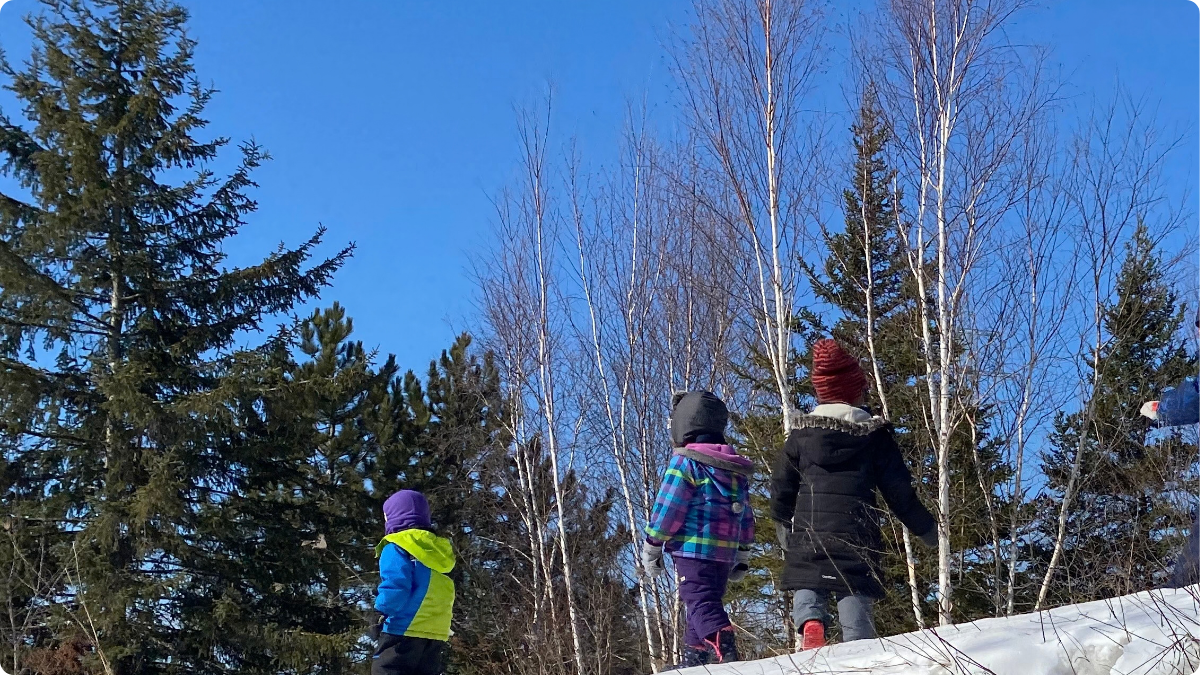
To make up stories outdoors, you don’t have to prepare anything in particular before you go. Instead, you can simply start by looking around.
In the fall, nature offers us a multitude of details to notice. The colors change, leaves gradually cover the ground, seeds appear, some branches become bare, and the light itself takes on a different quality.
And if you take the time to pay attention and listen, you will also hear the wind rustling through the leaves, a bird you can’t see, a branch cracking somewhere in the forest… these sounds can spark our curiosity and provide the perfect opportunity to ask ourselves and our children:
“What could have made that noise?”
And from there, we can let the children’s imaginations run wild.
Perhaps they will come up with a very realistic explanation. But you might also be surprised to hear a giant squirrel pop up in the story your child tells. In the end, it doesn’t really matter, because what matters most is the opportunity to talk together, laugh, create, and imagine. And it is often these moments that are the best—the ones that recharge us all and bring us closer together.
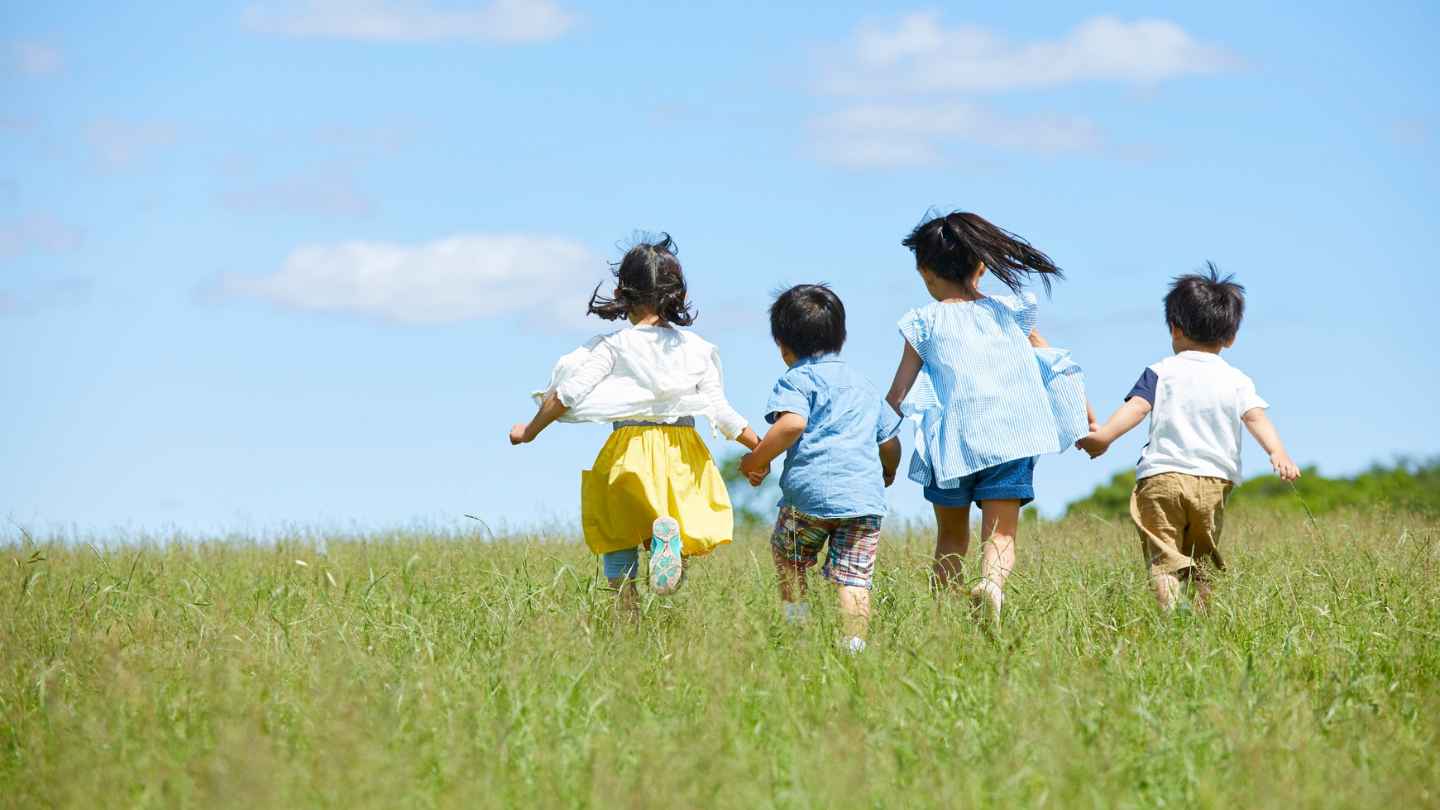
When we offer children this kind of experience, we can easily fall into the habit of guiding them: pointing out the character, starting the story, or suggesting what that strange branch might become.
Yet, a very simple question is often all it takes:
“What does that remind you of?”
“What do you think might have happened here?”
“Who do you think left this mark?”
Then comes the time to listen.
The story that emerges might not be the one we would have imagined. It will likely change several times along the way, and some details might not make any sense to us.
That is okay. There is nothing to “get right.” The fun lies precisely in seeing how far their imagination can take them.
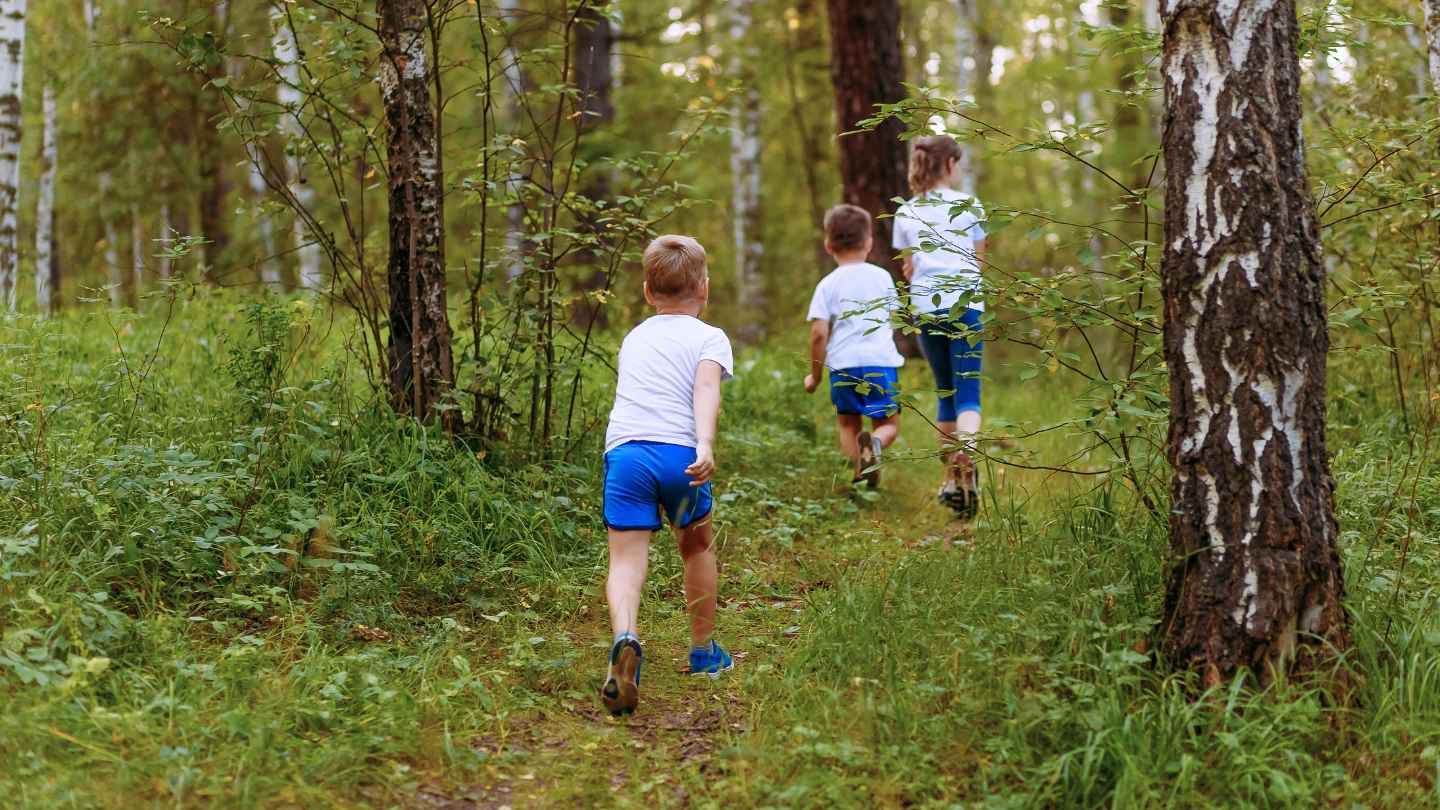
Not all children necessarily want to tell a long story during a walk. A very young child might simply decide that a pinecone is a hedgehog or give a tree a name.
Another child might make up a few sentences, and older children may very well imagine characters and create an entire adventure. They might also take a completely rational approach and try to connect several discoveries they made during the walk.
If they make up a story, it doesn’t necessarily have to end when they get home. It can be told to someone who wasn’t there, expanded upon, drawn, written down, or kept in a memory book.
But it can also remain exactly what it was: a story made up together during a walk and a wonderful shared moment.
These moments can also become a simple way to bring the French language to life as a family.
Coming up with a character’s name, describing a leaf, explaining what you are imagining, listening to someone else’s story… the words come naturally because the child has something they want to share. There is no need to turn it into an exercise.
We tell stories, ask questions, and sometimes laugh at the ideas that come up. We look for a word when we need one.
And French is simply part of this moment we are sharing together. Thanks to moments like this, it becomes an integral part of our children’s identity.
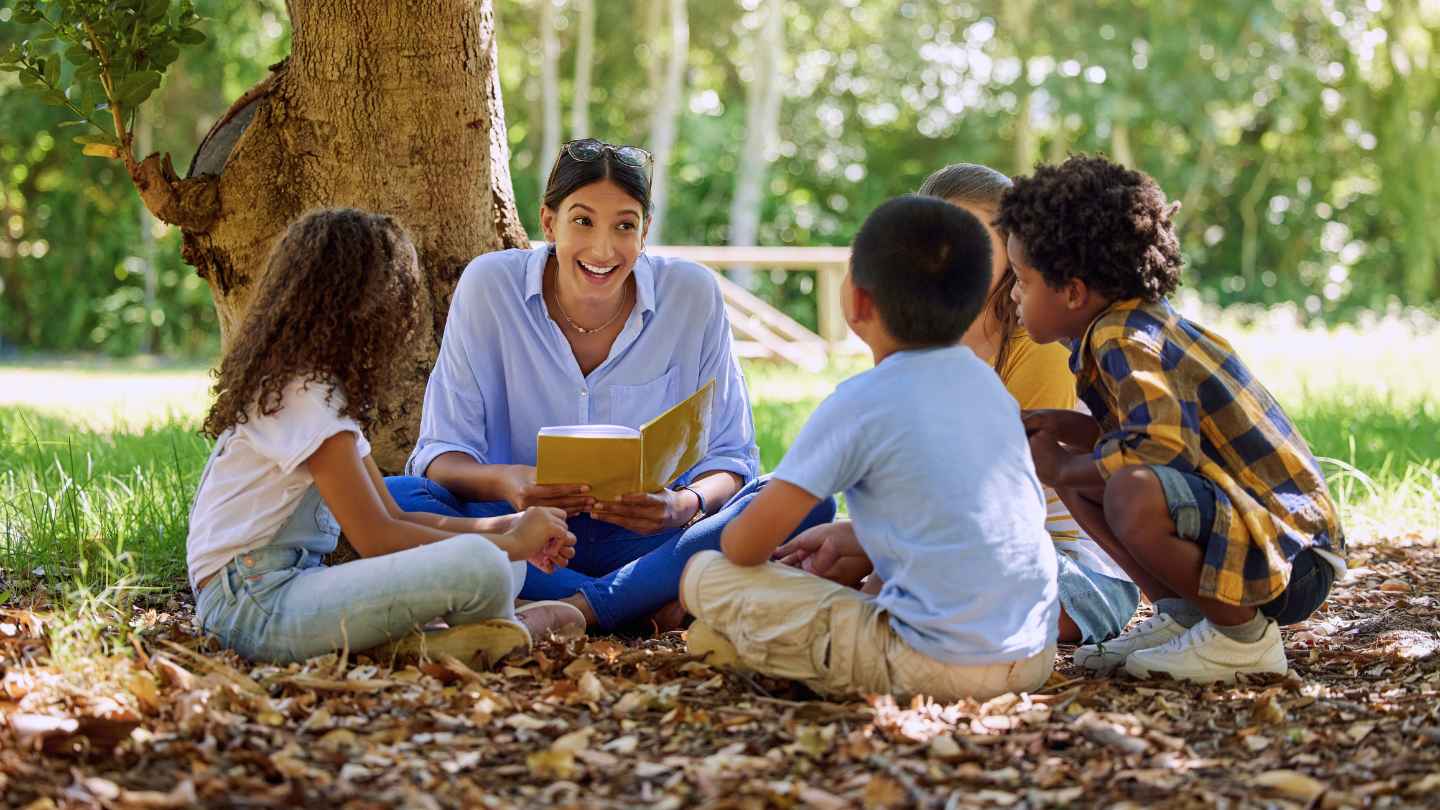
On your next walk, just try to slow down a little.
Look at the leaves on the ground. The shapes of the trees. The rocks. The tracks. Listen to the sounds around you.
When something catches your child’s attention, try to resist the urge to explain what it is for a few moments, and instead ask them:
“ What do you think it is?”
You might discover that a stump is not really a stump after all, that a branch is not really a branch, and that the tracks in front of you might belong to a creature you did not even know existed five minutes ago.
Nature provides the setting. For the rest of the story, we can trust our children.
There was a lot of excitement among the Boréal preschoolers. After a long time without being able to go to the forest, the children in the preschool group finally had the chance and the joy to return!
Everyone, children and adults alike, had been looking forward to this moment. For some members of the educational staff, it was even their very first chance to explore this space with their group.

For this first outing, we mainly took the time to reconnect with the surroundings, make them our own again, explore, and enjoy being outside together once more. The children also used air-drying clay to make leaf prints and then paint them on the inside.
And the clay was a huge hit! So much so that when it was time to go home, one of the children started crying. So I took the time to get down on her level to listen to her and figure out what was wrong. Between sobs, she finally managed to say “clay” to me.
Clay! She didn’t want to leave without clay!
So I took a small piece of clay, which she was able to slip into her pocket. Immediately, the tears stopped flowing, and she happily rejoined her friends.
This story also shows us just how much the forest is becoming a familiar place for the children: a place where they can explore, play, and have their own experiences.
The forest is also playing an increasingly important role in the lives of the toddlers and infants at Boréal des tout-petits. For some time now, the educational staff has been documenting their outdoor experiences with the children.
Photos, observations, a moment captured during an exploration. All these glimpses give us a sense of what happens when the groups leave the centre to head into the forest.
And we wanted to highlight that in this newsletter.
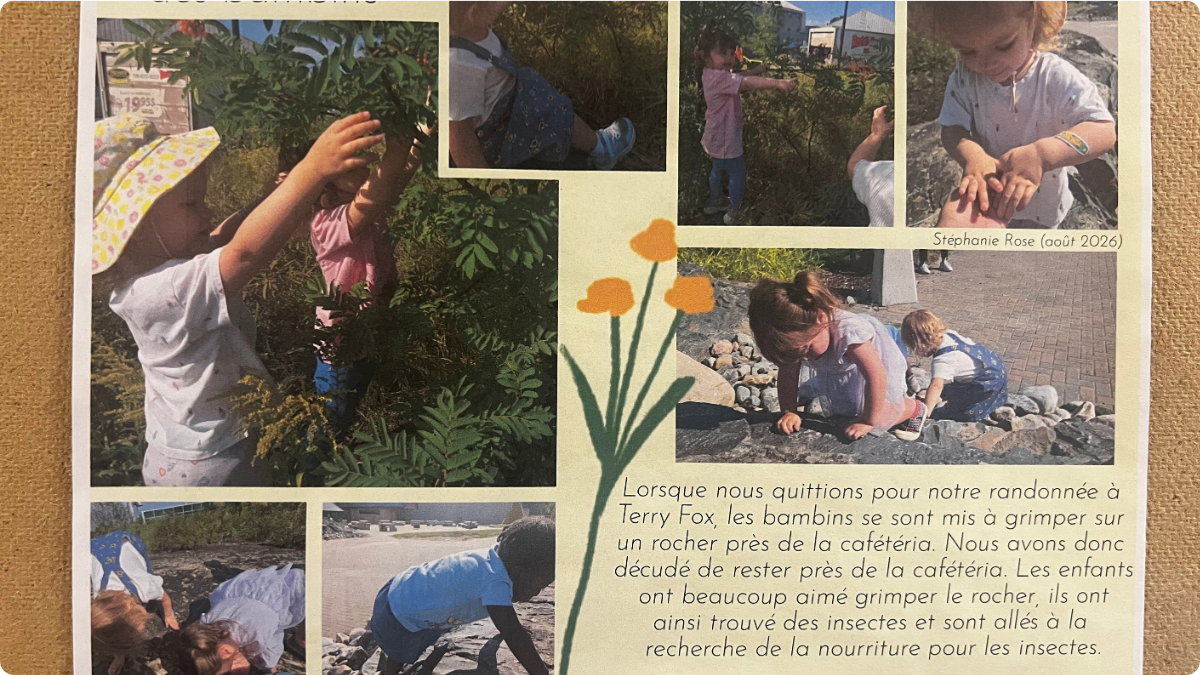
Because behind these images, there are also the educators who take the initiative to go out with the groups, explore with the children, and keep a record of what they observe.
For us, these accounts are invaluable. They help us better understand what the children experience outdoors and continue to support the teams. And they also give you a little glimpse into everything that happens in the forest when the children go there with the educators.
What if you used your next walk to let nature choose the characters for your next story?
This month’s challenge is very simple: work together to find three items during one of your outings.
It could be a red leaf, a strange rock, a branch, a pinecone, a footprint in the mud, a tree… No need to pick them up, just take a good look at them.
Once you have found your three items, try to weave them into a single story.
How did that odd rock end up at the base of the tree? Whose footprint is that? What if that leaf was actually a message left here for someone?
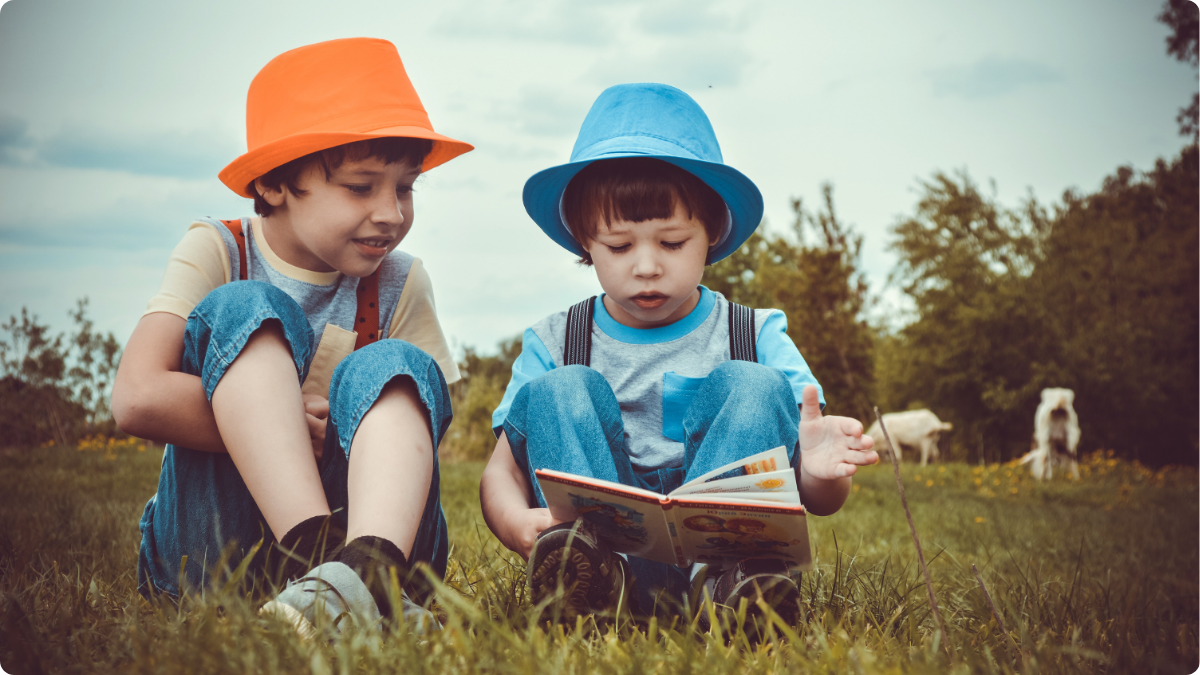
With younger children, a few sentences are enough. You can give a character a name or use your imagination together to figure out what just happened.
Older children, on the other hand, might want to take it a step further: invent an entire adventure, retell it when you get home, draw it, or even write it down.
And don’t forget—there is no such thing as a right or wrong story. The goal here is simply to observe, imagine, and share a moment together.
Send us a snippet of your story, a drawing, or a photo of one of the elements that inspired it. We would love to see where your imagination took you and who knows, we might even share some of your creations in an upcoming newsletter!
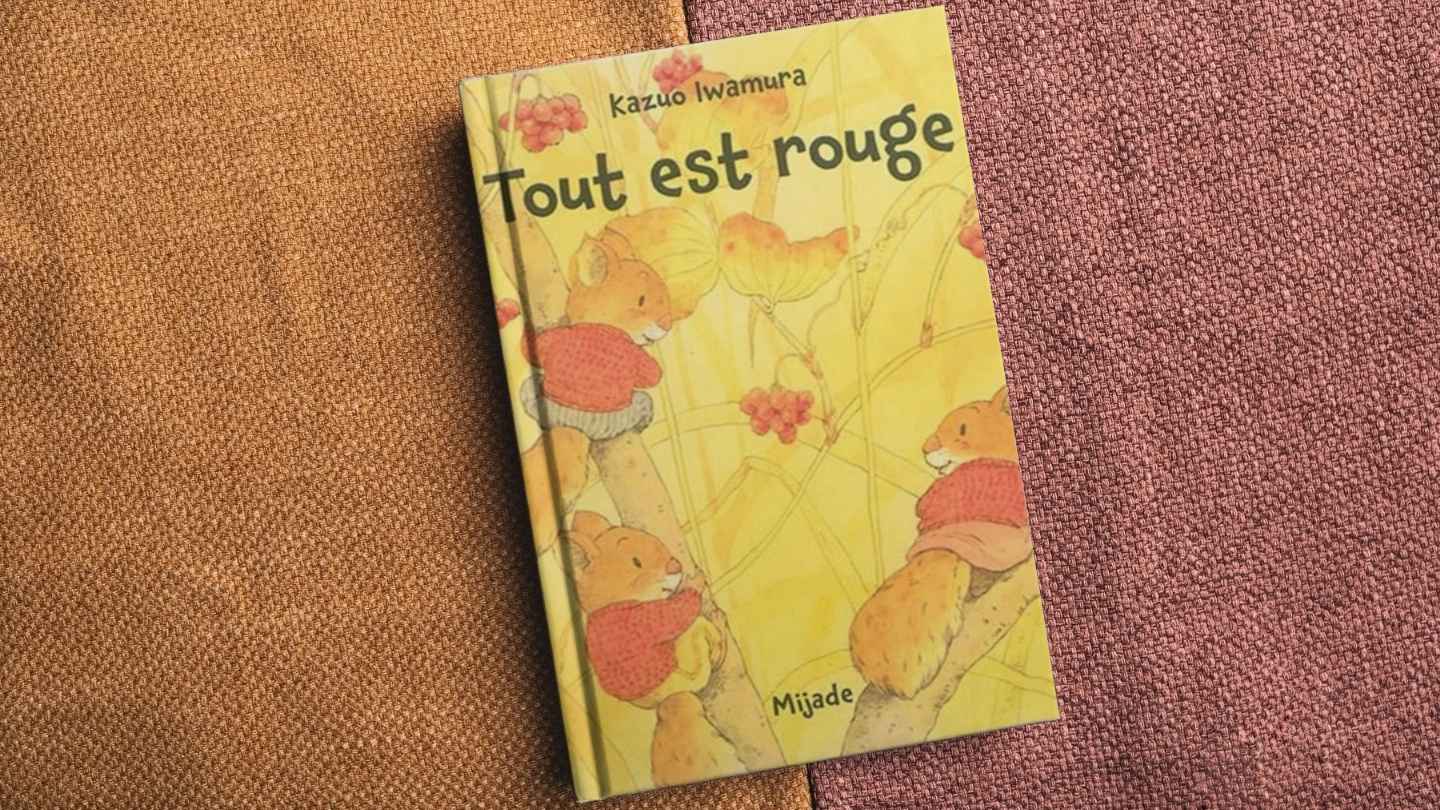
This month, we invite you to discover *Everything Is Red* by Kazuo Iwamura.
It is the story of Nic, Nac, and Noc, three little squirrels who go for a walk in the forest and discover that the landscape around them has changed. Everywhere, red has taken over, echoing the colour of their own sweaters.
It is a lovely story to share with children at this time of year, just when we can observe these same changes all around us.
After reading, why not continue the story outside? Look together at the trees and leaves around you. What colour seems to be dominating today?
Throughout this newsletter, we have talked about the stories children can imagine based on what they observe around them.
But stories are also meant to be told, listened to, and shared.
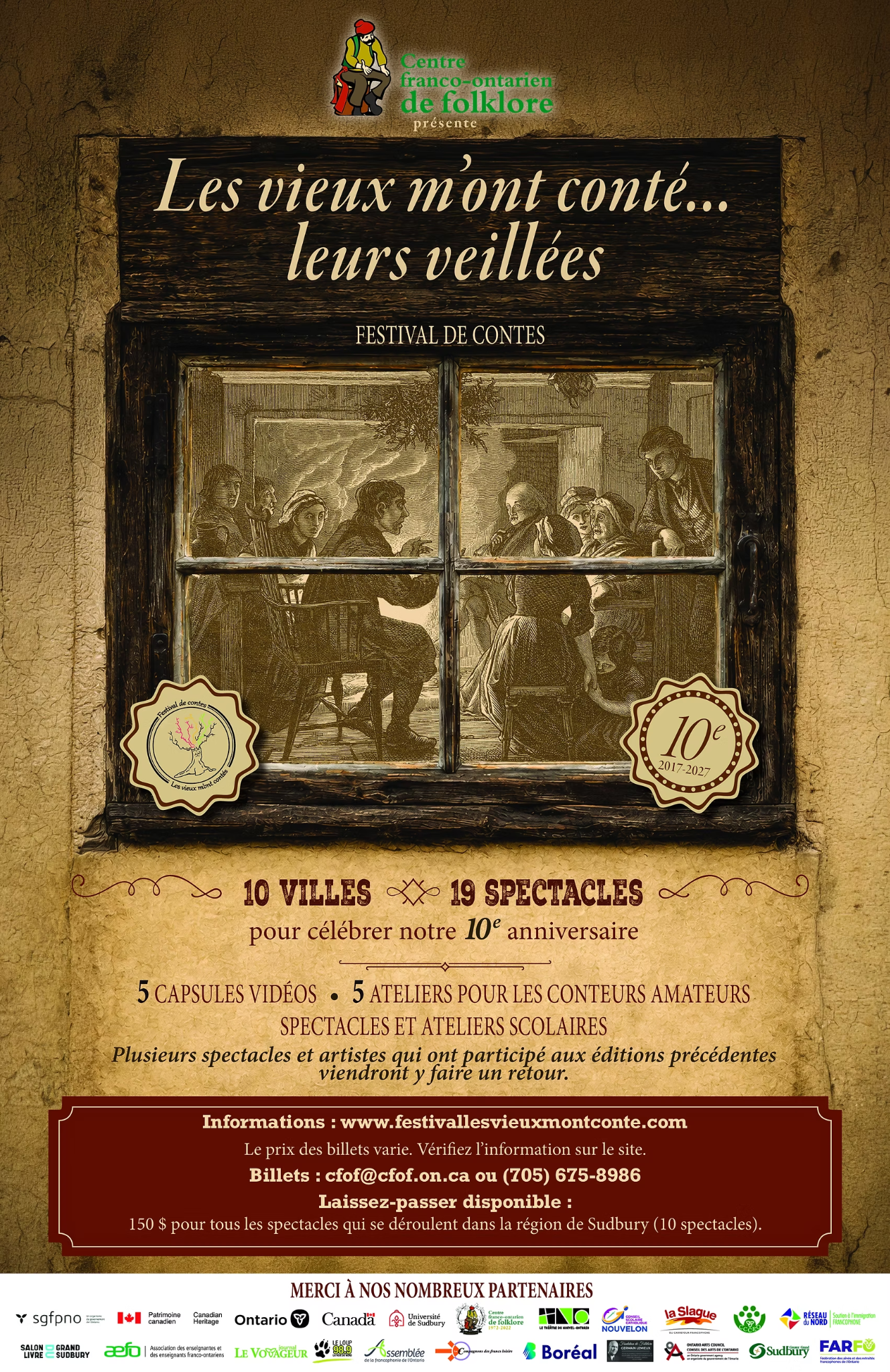
From October 15 to 25, the “Les Vieux m’ont conté” festival will give us the perfect opportunity to come together around storytelling and Francophone culture. And this year is special because it is already the festival’s 10th edition!
For about ten days, several storytellers will bring stories to life in different ways: performances, workshops, storytelling evenings, and other events will be offered in Sudbury and elsewhere in Ontario. Some events are even free.
And since we have been talking about nature since the beginning of this newsletter, one event in particular caught our attention: on Sunday, October 25, a storytelling hike will take place at the Notre-Dame-de-Lourdes Grotto in Sudbury. It is a wonderful way to combine a walk, stories, and heritage before the festival comes to a close!
Stories are a wonderful way to bring French to life within families and communities, but they are far from the only way!
In October, we will also have the chance to get together for another activity we really enjoy: board games.
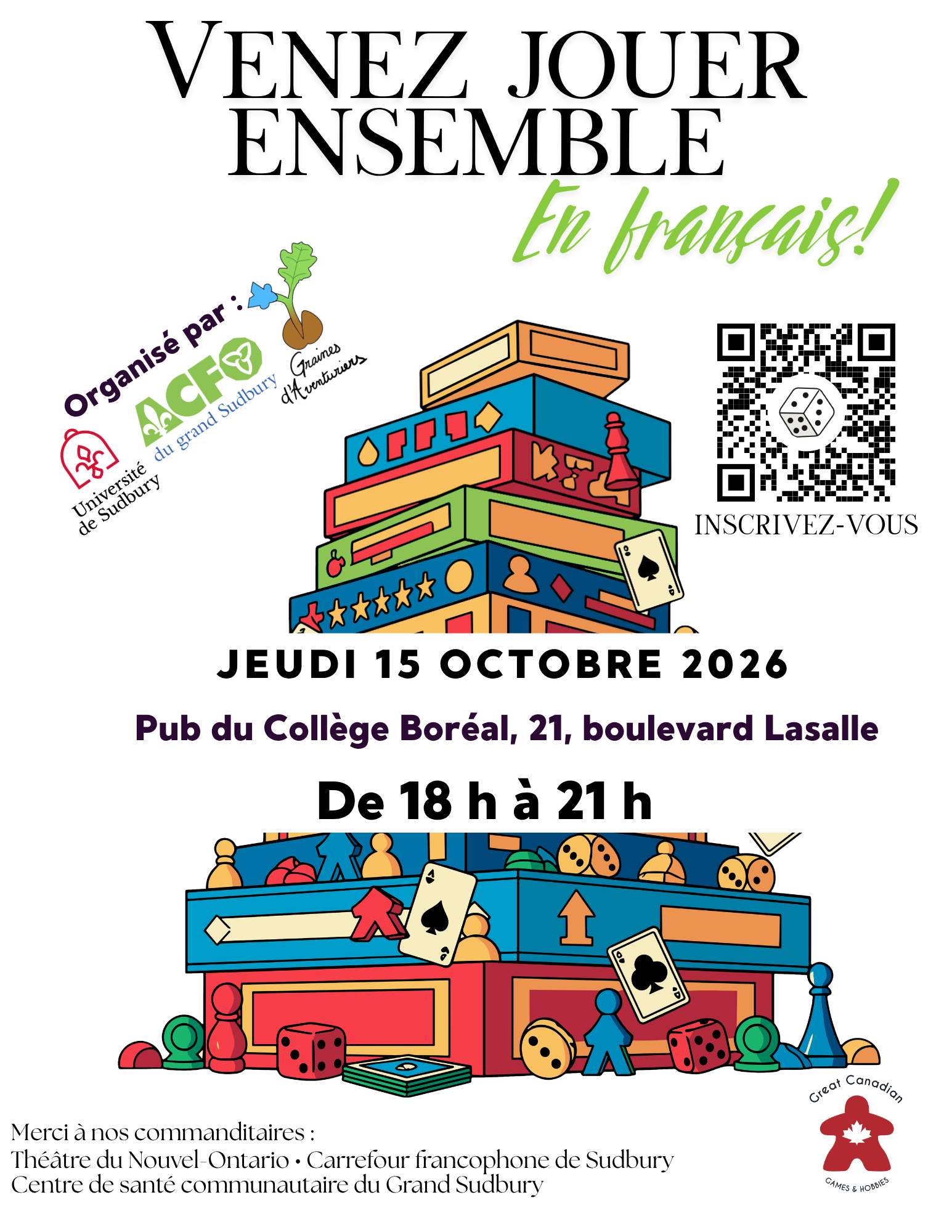
An evening of games in French!
On October 15, from 6:00 p.m. to 9:00 p.m., join us at the Pub du Collège Boréal for an evening dedicated to board games in French.
Whether you are a game enthusiast or simply curious to discover new ones, the main idea is to have a good time, meet other French speakers and Francophiles, and, of course, play together in French.
The event is free and open to everyone, young and old!
While putting together this newsletter, I found myself wondering how often we miss a story without even realizing it.
A leaf swirling in the air before it falls, a few footprints in the mud… To us, these are sometimes just tiny details. But a child can see so much in them.
And that is something I have always appreciated when we spend time outdoors. We can take the same path over and over again, and yet each time, it feels like a completely different walk.
So this fall, if your child suddenly stops in front of something that seems perfectly ordinary to you, take the time to stop with them, to look, to listen.
And if they don’t say anything, just ask them:
“What are you thinking about? ”
I would be very curious to know where that simple question might take you.
Until our next newsletter, enjoy this beautiful season, your outdoor adventures, and all the little stories that are surely already waiting for you along the way.
I will see you very soon and wish you wonderful family explorations!
Mathieu Lambert
CPE Nature Project Coordinator and Outdoor Education Advisor, Carrefour francophone.
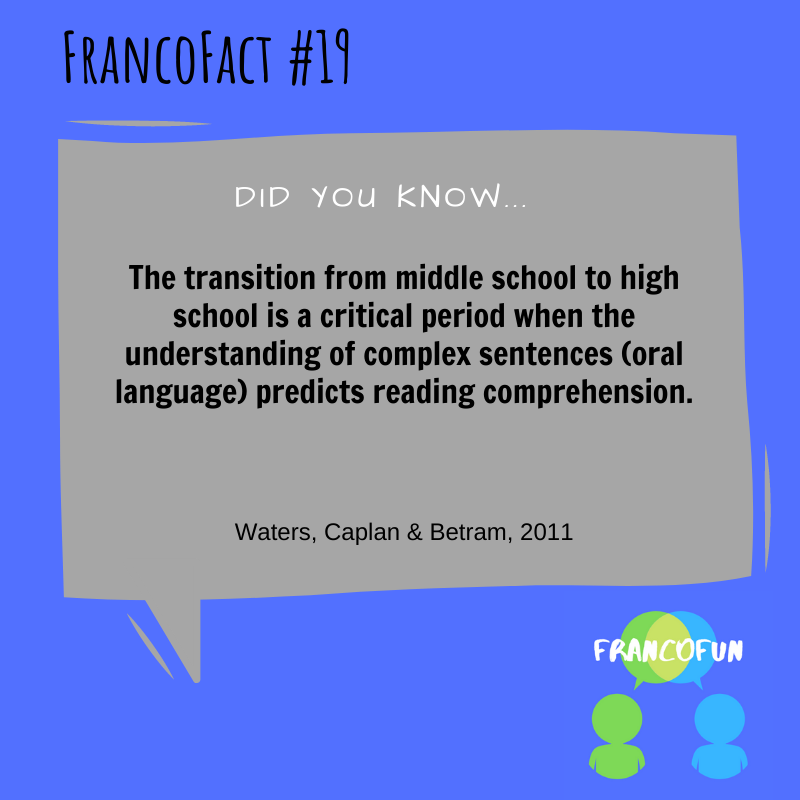
FrancoFacts: Findings from research on vocabulary and language in minority contexts, presented by Chantal Mayer-Crittenden, a speech-language pathologist and professor at Laurentian University
Our project partners: PLAYLearnThink, Collège Boréal, The First Nations, Métis, and Inuit Educational Centre, and Pavillon Shkode (Heart of the Fire); our research partners: the Center for Social Innovation for Children and Families; and our funding partner: Employment and Social Development Canada.
"*" indicates required fields

Fair weather is upon us! Here is an array of small outdoor games for the family! With the weekend just around the corner, what could be better than spending some quality time together? Here are some i...
View Blog Post
On June 25, 2025, supervisors from the Carrefour francophone sites in Sudbury and Sudbury East gathered at Fielding Park for an enriching team-building day. The meeting was an opportunity to strengthe...
View Blog Post
Michel Laforge is a Sudbury-based multidisciplinary sound artist who creates music, sound design and interactive installations. You may have heard his work in Telecolor, at Théâtre du Nouvel-Ontario...
View Blog Post
You are lucky to live with your family. Some people folks aren’t so lucky. How about sharing some love through the mail? What a great occasion to showcase your artistic talents! ...
View Blog Post
Questionnaire sent to candidates for the Municipal Election As part of its “Vote for the Arts!” campaign, the ROCS sent a bilingual questionnaire to all mayoral candidates and candidates in the 12...
View Blog Post