
Published on Thursday, November 26 2026
by landrianina in Blog
Dear Families,
In Sudbury, the cold seems to be taking its time this year! On November 21, temperatures even reached 15.1 °C—a new record high for that date! While we expect the cold and snow to set in gradually, the scenery still has an autumnal feel to it in some places. Only the bare trees and the shorter days remind us that winter is approaching.
However, we also know that in Northern Ontario, conditions can change very quickly! The cold and snow will undoubtedly end up transforming our surroundings. And with them, our outdoor routines will also need to adapt.
When temperatures drop, it is easy to fall into the habit of spending more time indoors. Yet winter isn’t a season meant for simply waiting for spring to return—it is a season to experience and discover! So, how can we support our youngest children through these changes and help them continue to explore their surroundings?
This month, I invite you to discover how to make winter a season full of play and discovery, while adapting our routines to the weather conditions. We will also share some wonderful experiences from our centres, a new challenge to take on as a family, and cultural and community events you won’t want to miss!
Enjoy reading, and above all: have some great outdoor adventures!
Mathieu Lambert
CPE Nature Project Coordinator and Outdoor Education Advisor, Carrefour francophone.
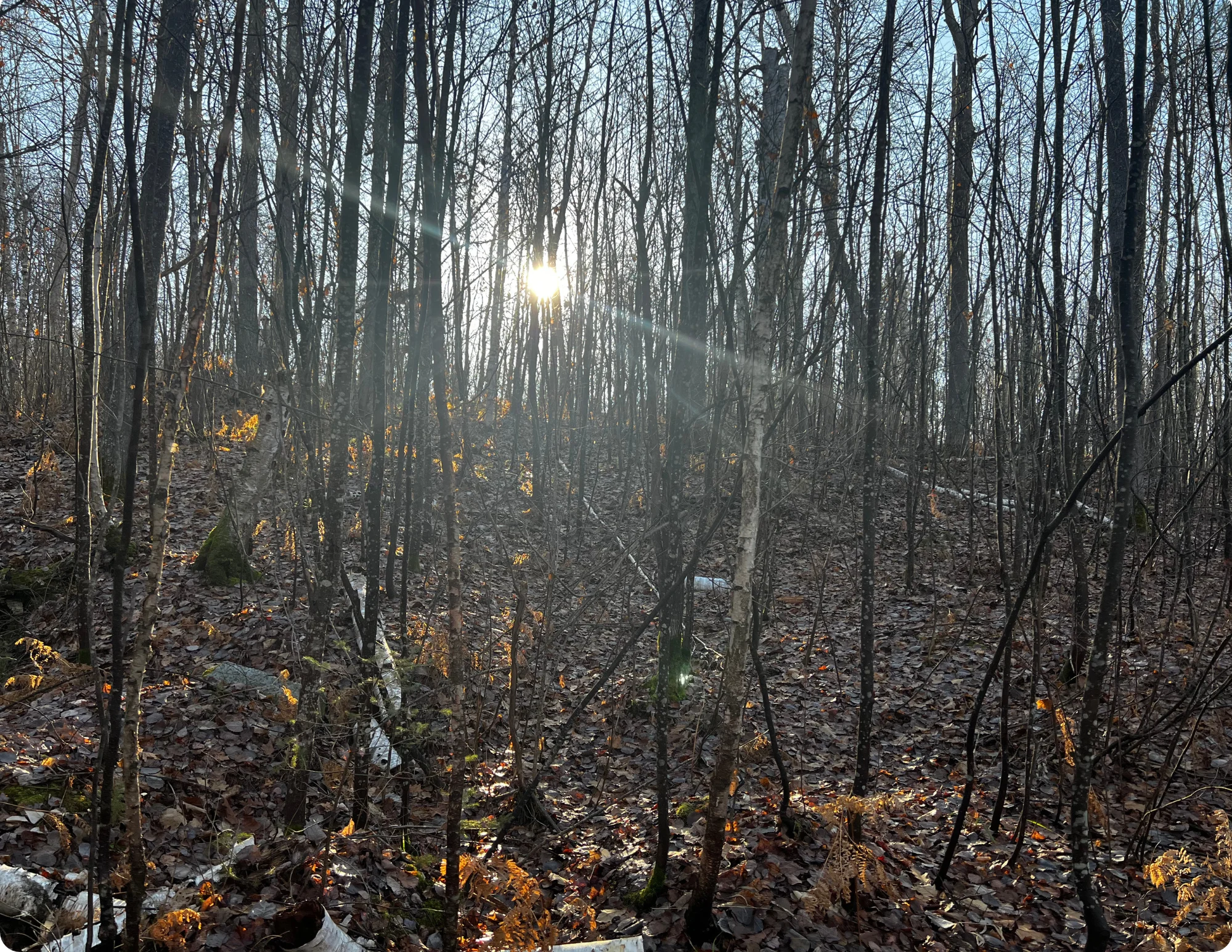
The first snowfall is coming soon, and with it, the trails will disappear under a beautiful white blanket and the branches will be covered in frost. Even the sounds will seem more muffled. The atmosphere outside will be completely different!
I find it incredible to see just how much the outdoors can offer us different experiences depending on the season. Winter transforms our surroundings—and with them, our opportunities for play and discovery.
A small hill becomes a sledding hill, snow turns into a building material, and animal tracks invite us to conduct real-life investigations. Even without snow, frozen puddles, frost, or changes in light offer wonderful opportunities for exploration.
And the good news? You don’t even need to plan a specific activity! Sometimes, all you need to do is give children time and space to observe, experiment, and invent their own games.
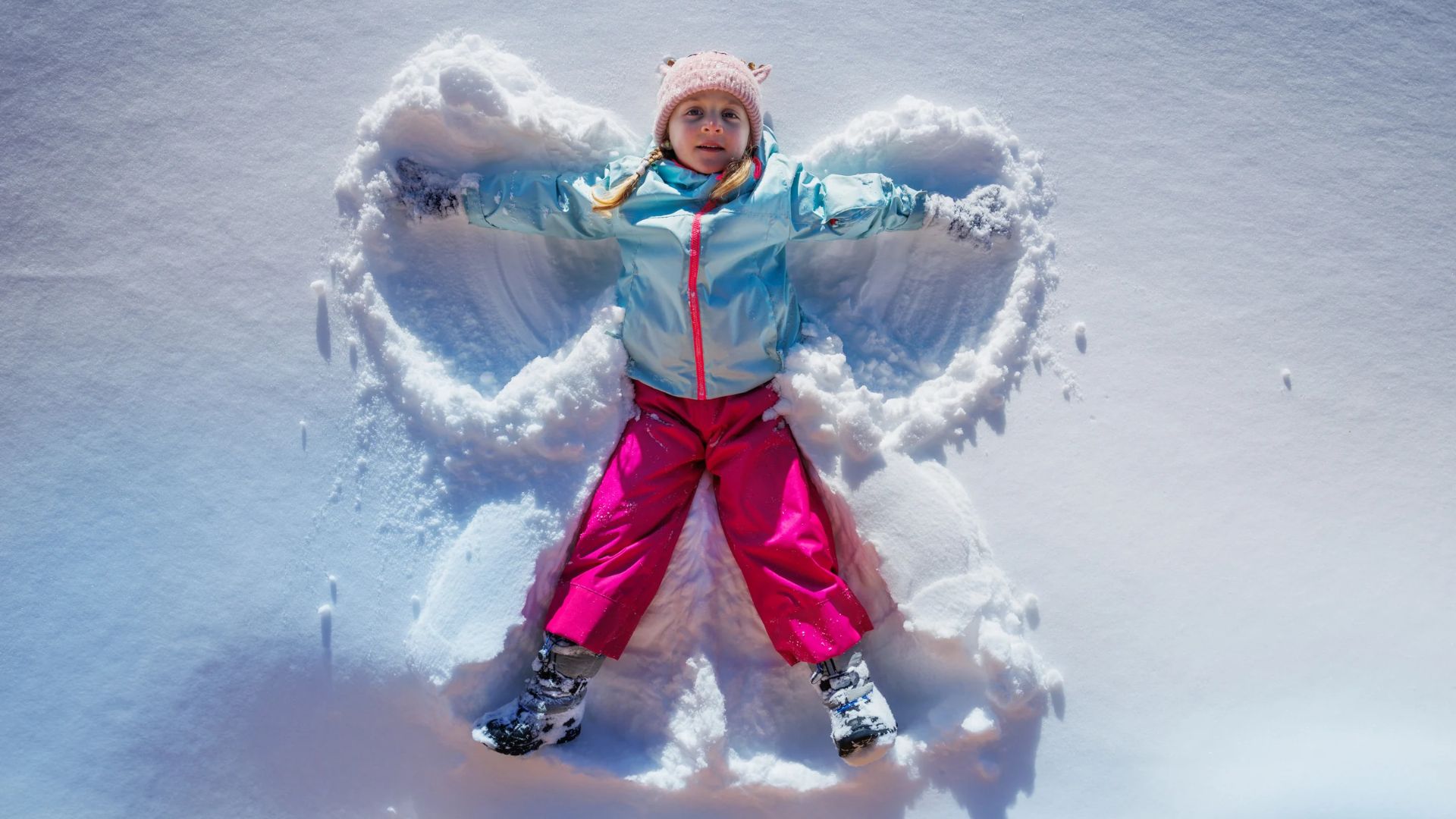
We’ve all had an outing cut short by frozen feet or soaked mittens! In winter, the clothes you choose can make all the difference between an enjoyable experience and an urgent need to head home.
One of the most effective tips is to follow the three-layer system:
And don’t forget your extremities! A hat that covers your ears, warm mittens, and appropriate boots are essential.
Here is another little tip that can make all the difference: slip a spare pair of mittens and socks into your bag! These few items of clothing can sometimes save the day!
You should also be careful not to overdress children. When they run, climb, or build things, they generate heat. If they sweat, their clothes can get damp and make them feel cold when they’re less active.
This is surely one of the questions we ask ourselves most often in winter!
The answer depends on several factors: the temperature, of course, but also the wind, the children’s ages, their clothing, and the planned activity.
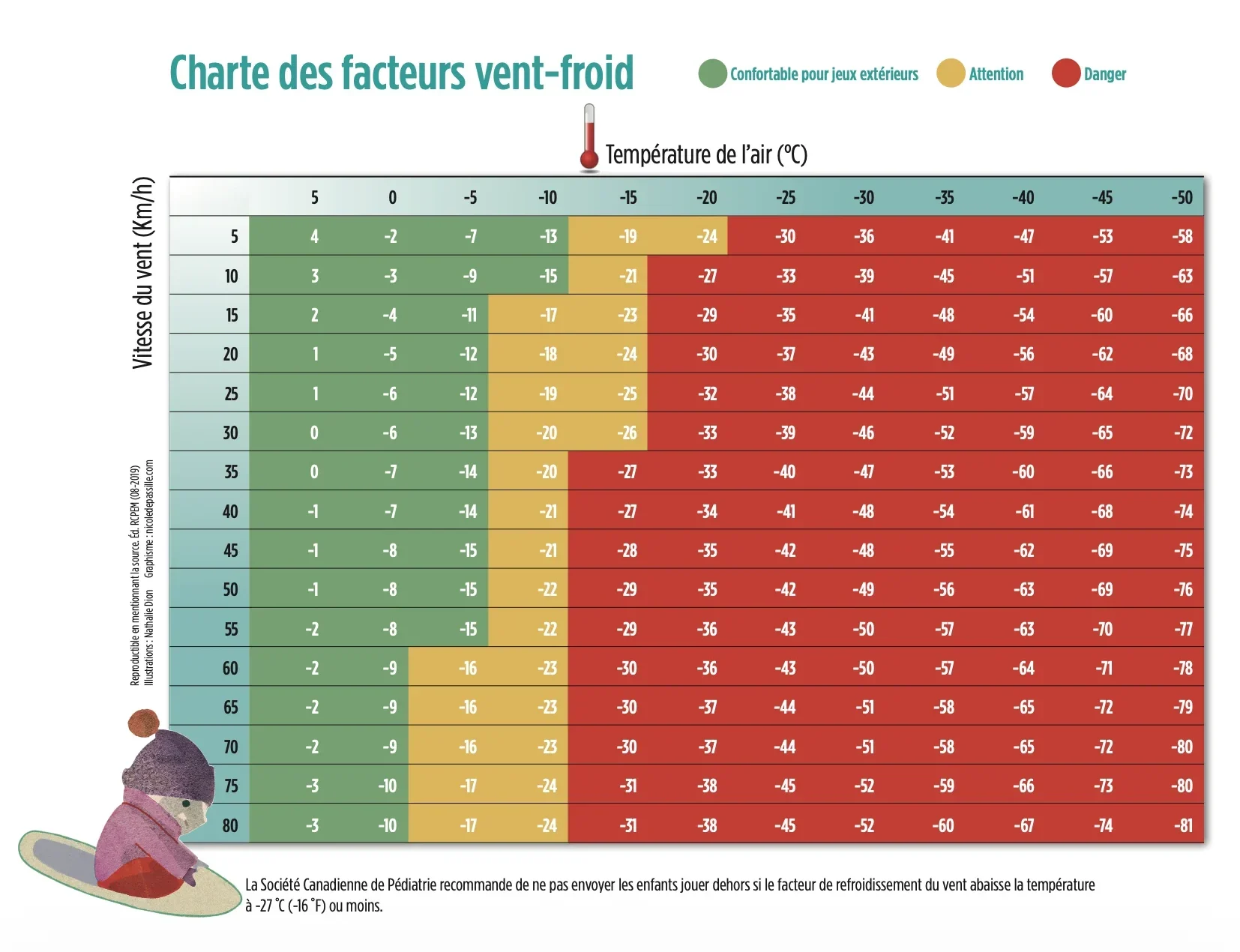
For example, a temperature of -10 °C with no wind does not present the same conditions as the same temperature accompanied by strong gusts.
It is therefore important to check not only the forecast temperature but also the wind chill, which tells us about the combined effect of the cold and the wind on exposed skin.
According to the Canadian Paediatric Society, parents should consider keeping children indoors when the temperature or wind chill reaches -27 °C or lower.
But that doesn’t mean that all temperatures above that threshold automatically make it safe to go outside! Starting at -15 °C, the Canadian Pediatric Society also recommends shortening the duration of outdoor play.
The Charte des températures du Regroupement des CPE de la Montérégie (Temperature Guidelines issued by the Montérégie Association of Childcare Centres) can also be a useful tool for assessing conditions and adapting activities.
Beyond the numbers, the most important thing is to watch the children. A child who is shivering, complaining of being cold, or becoming unusually quiet may need to go inside to warm up. Babies and toddlers require special attention, as they cannot always express their discomfort.
And above all, an outing doesn’t have to last two hours to be rewarding! Fifteen or twenty minutes can be enough to explore, observe, or simply enjoy being active outdoors, when conditions allow.
source : cpelieu.com
Winter usually brings new challenges: slippery surfaces, deep snow, uneven terrain, and snow-covered hills.
Faced with this, our first instinct might be to impose more restrictions to prevent accidents. However, certain experiences help children develop their gross motor skills, coordination, and ability to assess their own limits.
Our role as adults is to identify dangers, set appropriate limits, and support children as they explore—without necessarily intervening every time they encounter a difficulty.
A snowbank, for example, can become a wonderful playground, provided we make sure it is stable, free of hidden obstacles, and located away from traffic and snow removal operations.
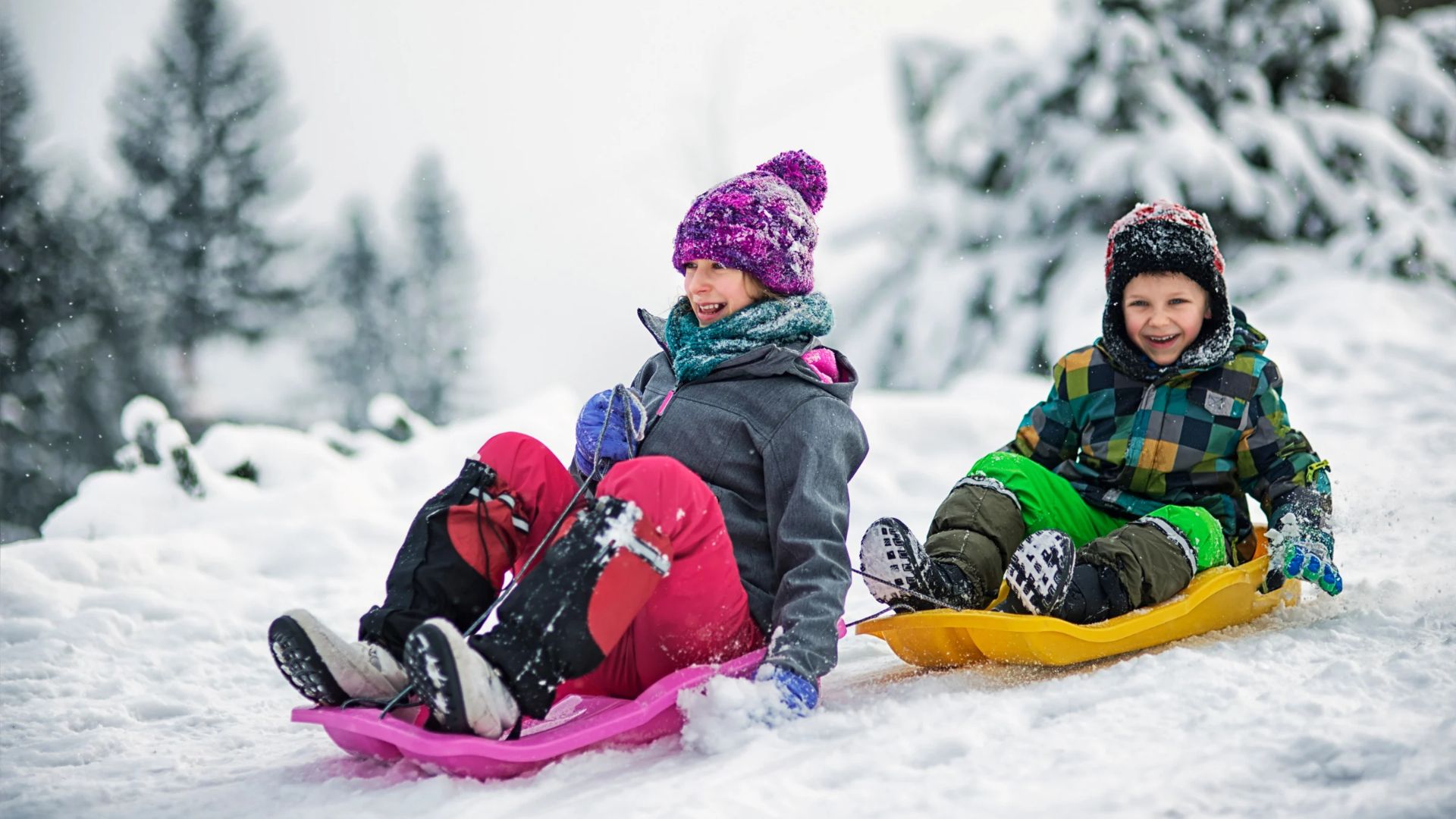
The goal isn’t to eliminate all challenges, but to allow children to explore in a suitable environment, with attentive supervision.
Not sure where to start? You could simply go back to a park, a playground, or a trail you’re already familiar with, and observe the changes together, look for animal tracks, or even let the children come up with their own games.
After all, what matters isn’t spending a long time outside or going out in all kinds of weather, but continuing to make room for nature in our daily lives, even in winter. And you will quickly realize just how good it feels!
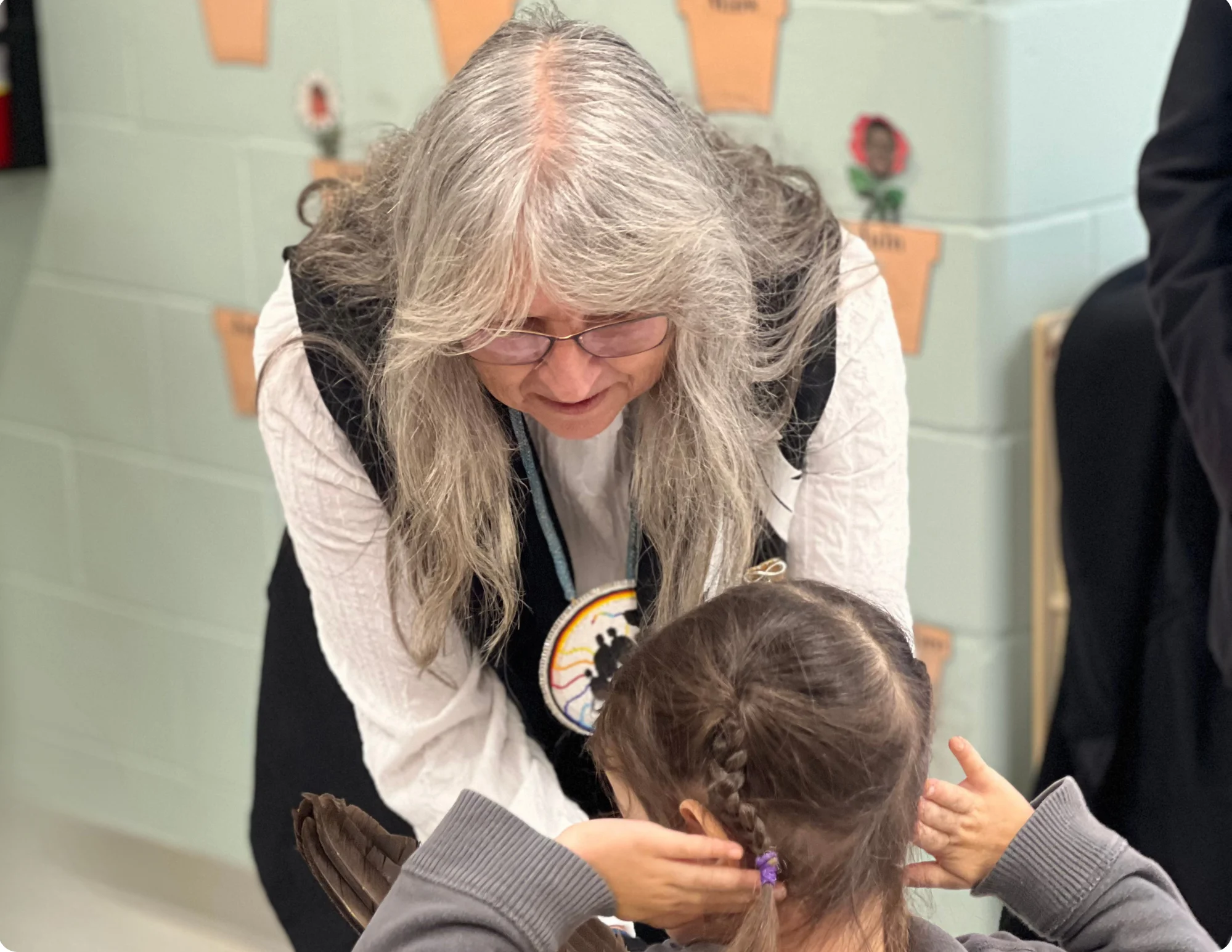
To mark the opening of the “Forêt des tout-petits” early childhood centre, the children, families, and staff had the opportunity to spend time with Nokomis Sharon, an Indigenous elder.
To mark this new milestone, she led a purification ceremony inspired by the traditional practice of smudging, which she adapted so it could be performed indoors. This allowed both adults and children in attendance to participate.
Through this shared experience, Nokomis Sharon purified the spaces of the new centre to help welcome the positive energies and experiences that will come to life there.
It was a wonderful way to celebrate the opening of the centre, which will now welcome children, their families, and staff, while contributing to the life of our community!
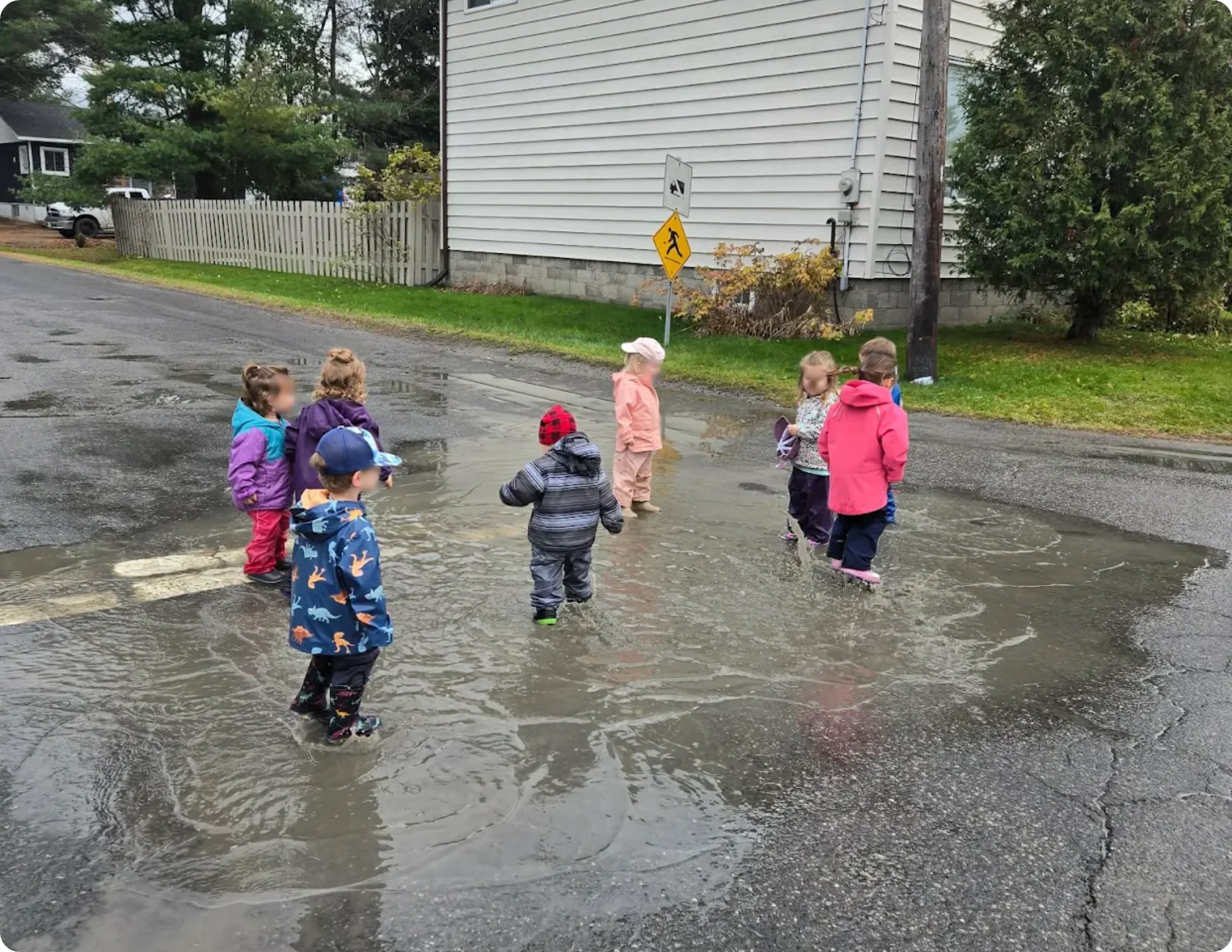
What a wonderful adventure! At the “Trésor des tout-petits” early childhood centre, the children were getting ready to go out and play in the yard when their attention was drawn to some puddles.
The weather was mild, and the children were wearing their rain boots and waterproof pants. Under these conditions, there was no way we could stop them from playing in the puddles!
The outing turned into a walk entirely led by the children. They chose their own path, hopping from puddle to puddle, until one of them even offered to show his friends his house. It was a very joyful moment that they will remember for a long time!
This experience reminds us just how important it is to make room for children’s own ideas. By doing so, we allow them to actively participate in decisions that affect them and, at the same time, create unforgettable memories!
As the cold weather sets in, nature transforms. Trees lose their leaves, puddles begin to freeze, colours change, and some animals become less visible.
Your mission, should you choose to accept it: find five changes in a place you know!
To do this, simply choose a place you like to visit with your family: your backyard, a park, or even a trail. Then, keep your eyes and ears wide open!
What has changed since your last visit? Do the trees look different? Do you still hear the same birds? Have you noticed any new tracks on the ground?
For younger children, have fun pointing out and naming the changes you see. Older children can take photos, draw what they discover, or try to explain what is happened.
Feel free to share your discoveries with us! We would love to hear what surprised your family the most.

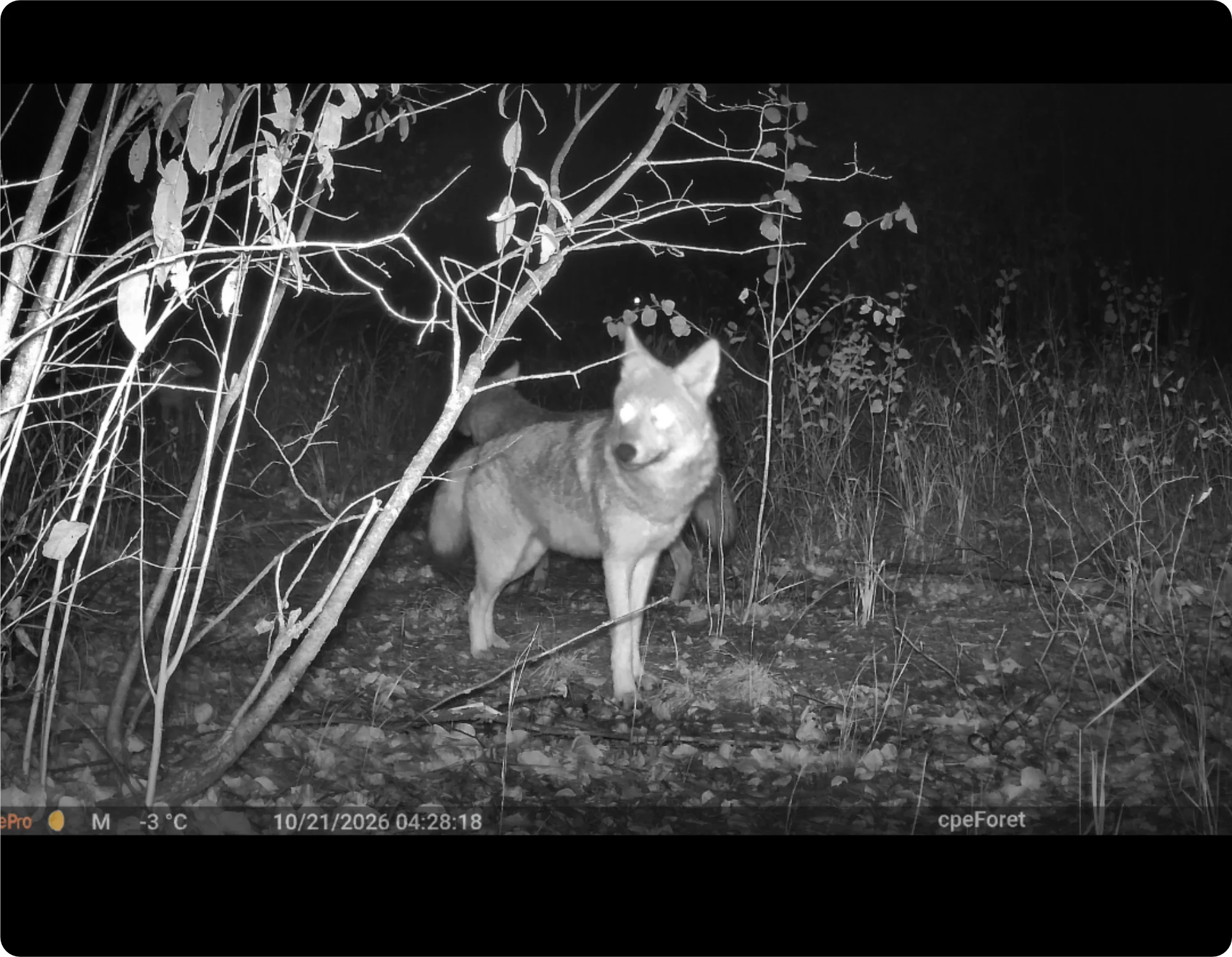
Have you ever noticed small tracks in the snow or on a muddy path?
Even when we don’t see them, animals can leave clues behind showing they’ve been there. But how can you recognize their tracks?
To play detective, here are a few clues you can look for:
These observations will help you more easily determine which animal left these tracks. Deer, for example, usually leave tracks consisting of two parts, corresponding to their hooves. Hares, on the other hand, often leave recognizable groups of four tracks as they move by hopping.
Of course, it is not always possible to identify an animal with certainty, but it is still fun to try!
On your next walk, keep your eyes peeled! If you spot any tracks, try to observe them without disturbing the animals or straying from the trail.
The coming weeks are sure to hold plenty of surprises for us! Perhaps the snow will finally blanket our landscapes with its beautiful white coat.
What I’m certain of is that new opportunities to play, explore, and marvel with the kids will soon be ours!
So, whether it is for a walk in the woods, a few minutes watching the first snowflakes fall, or playing in the snow, don’t hesitate to put on your boots and coats to enjoy what nature has in store for us.
After all, every season has its own treasures waiting to be discovered!
See you soon for more outdoor adventures,
Mathieu Lambert
CPE Nature Project Coordinator and Outdoor Education Advisor, Carrefour francophone.
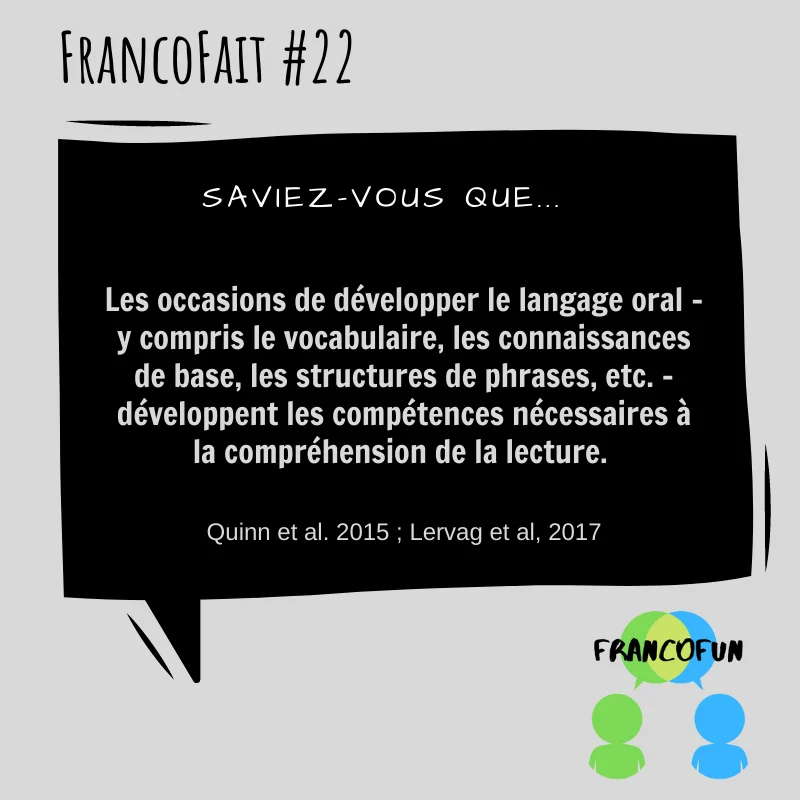
FrancoFaits: Findings from research on vocabulary and language in minority contexts, presented by Chantal Mayer-Crittenden, a speech-language pathologist and professor at Laurentian University
Nos partenaires de projet : PLAYLearnThink, Collège Boréal, Centre éducatif des Premières Nations, Métis et Inuit et la Pavillon Shkode (Cœur du feu);
nos partenaires de recherche : Centre d’innovation sociale pour l’enfant et la famille et notre bailleur de fonds : Emploi et Développement social Canada.
"*" indicates required fields

Fair weather is upon us! Here is an array of small outdoor games for the family! With the weekend just around the corner, what could be better than spending some quality time together? Here are some i...
View Blog Post
Today’s activity cultivates patience, dexterity, precision, helps with concentration and the sense of observation. Creating a mandala can take many hours or many days depending on the complexity...
View Blog Post
It’s next Friday! This year, la Slague is delighted to be partnering with Northern Lights Festival Boréal to bring you francophone programming! The festival is fast approaching, so mark your ca...
View Blog Post
In this third Music Notebook, we return to the origins of the Éveil musical program, which is currently being implemented in the Carrefour’s Centres de la petite enfance. The history of this pr...
View Blog Post
Je me présente : Jasmine, adjointe au marketing et aux communications. Je souhaite partager mon expérience aux côtés du personnel éducateur lors de la toute première formation en nature. Le 25 o...
View Blog Post